 Image 1 of 1
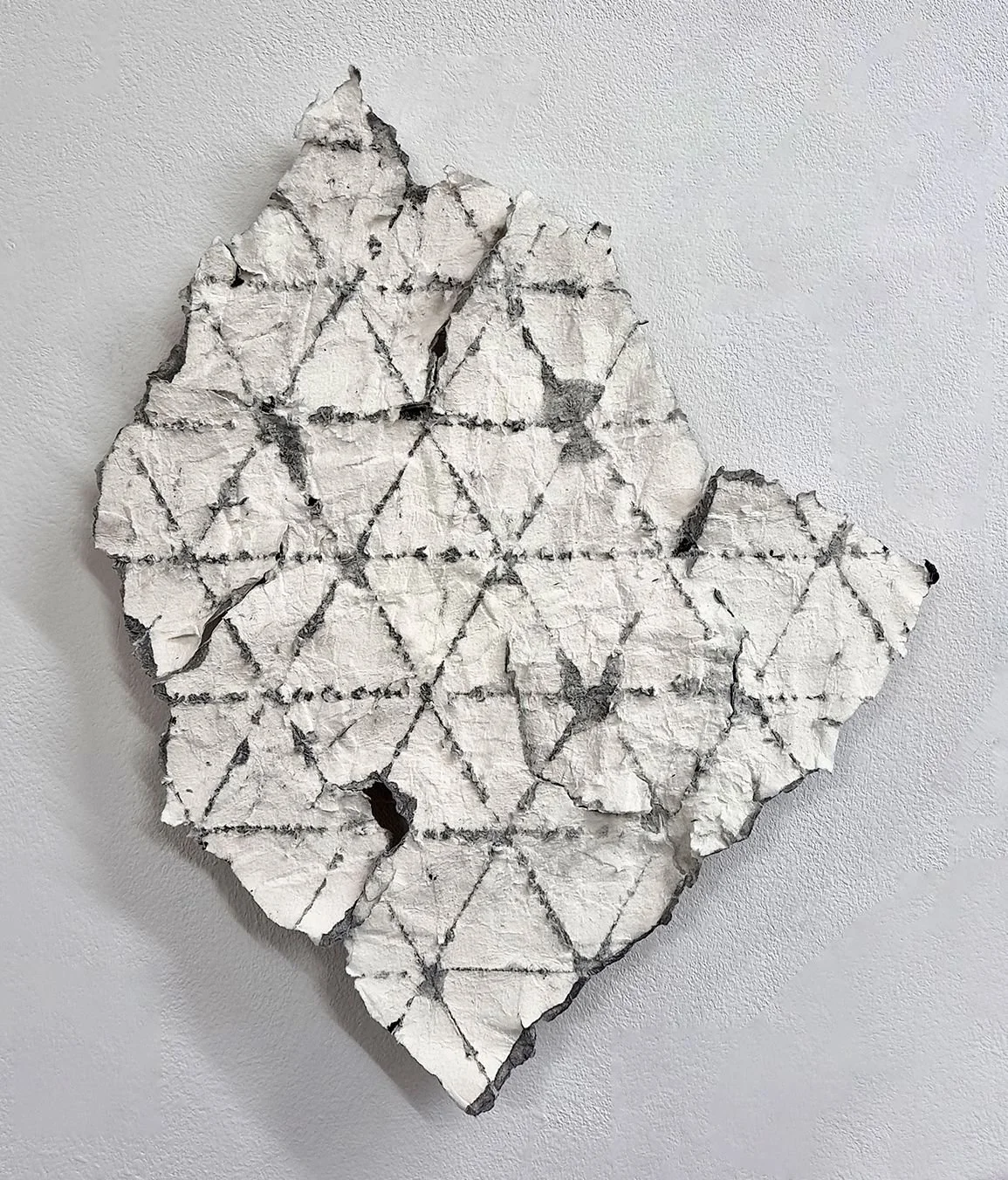
Ink on paper, on aluminium
48 x 39 cm
2026
Sculptural drawings on paper are characterised by textured, weathered surfaces, exploring the tension between structure and fragmentation, and the ways time and process shape memory and perception.
Essential to these works is the formal matrix of a grid, through which I examine impermanence, the fragility of systems, and the traces left behind through use and decay. Influenced by tiled floors, Islamic ceramics, and architectural forms encountered in my years in Sicily and Spain, I am attracted to geometric repetition and the silent histories embedded within worn surfaces.
While informed by minimalist traditions, I aim to preserve evidence of the hand, process, and the material history of each piece. I have used a heavy weight paper which, in addition to its archival longevity, withstands hours of quite physical 'working': my ‘drawing’ includes scoring, tearing, folding, ripping...
The removal of materials, in this case inks and layers of the paper support, as well as the building up of layers of media, is a key aspect of my work. This addition and subtraction leaves traces of making and unmaking. Each piece becomes a kind of visual archaeology, in search of balance and depth. They are as much about what has been removed as what remains, reflecting an interest in the transient nature of things.