 Image 1 of 1
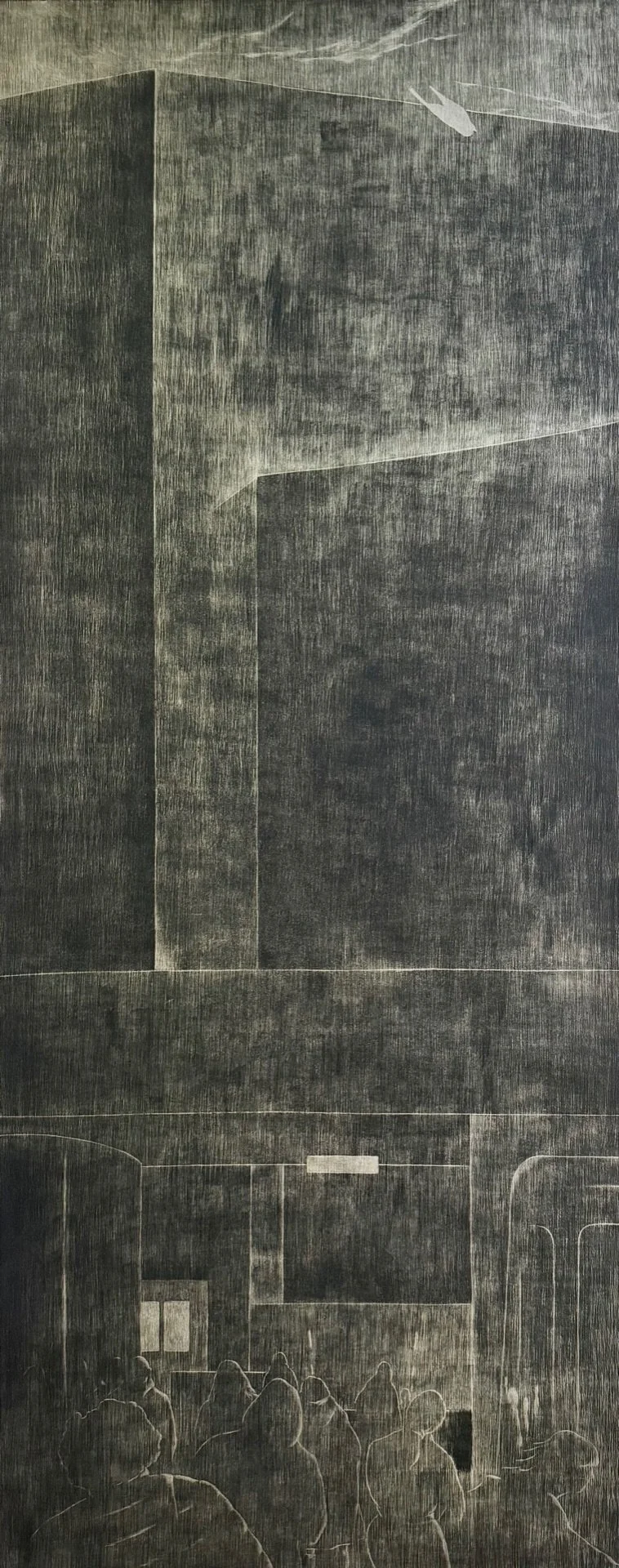
Mezzotint, Charbonnel oil ink on somerset paper
125 x 52 cm
2026
My practice begins with an embodied and intuitive perception of space. Combining drawing, printmaking, and spatial intervention, I explore how spaces hold bodily experience, traces of time, and emotional relationships. I focus on fleeting and unstable moments of perception that resist immediate verbal description, examining how people develop a sense of belonging within changing environments.
My sensitivity to space is rooted in early bodily experiences. During childhood, I spent six years in hospital due to illness. Surgery, medication, and prolonged exposure to medical environments shaped my understanding of bodily vulnerability, attachment, and spatial atmosphere. The hospital became not only a place of treatment, but also a space where bodily experience and emotional relationships were intertwined.
The 2008 Wenchuan earthquake further transformed my understanding of space. The collapse of familiar structures and the traces left behind revealed that space is not fixed, but can record events, time, and emotional histories.
Through experiences of migration and adaptation, I continue to explore the relationship between space and identity. I observe subtle environmental changes, including worn surfaces, architectural traces, shifting light, and the distances formed between people and their surroundings. Observational drawing captures immediate perceptions of everyday space, while the slow process of mezzotint transforms these experiences into a visual language of time and memory. Bringing together immediacy and accumulation, I use drawing and printmaking as interconnected methods to explore how perception, memory, and belonging take shape within space.