 Image 1 of 1
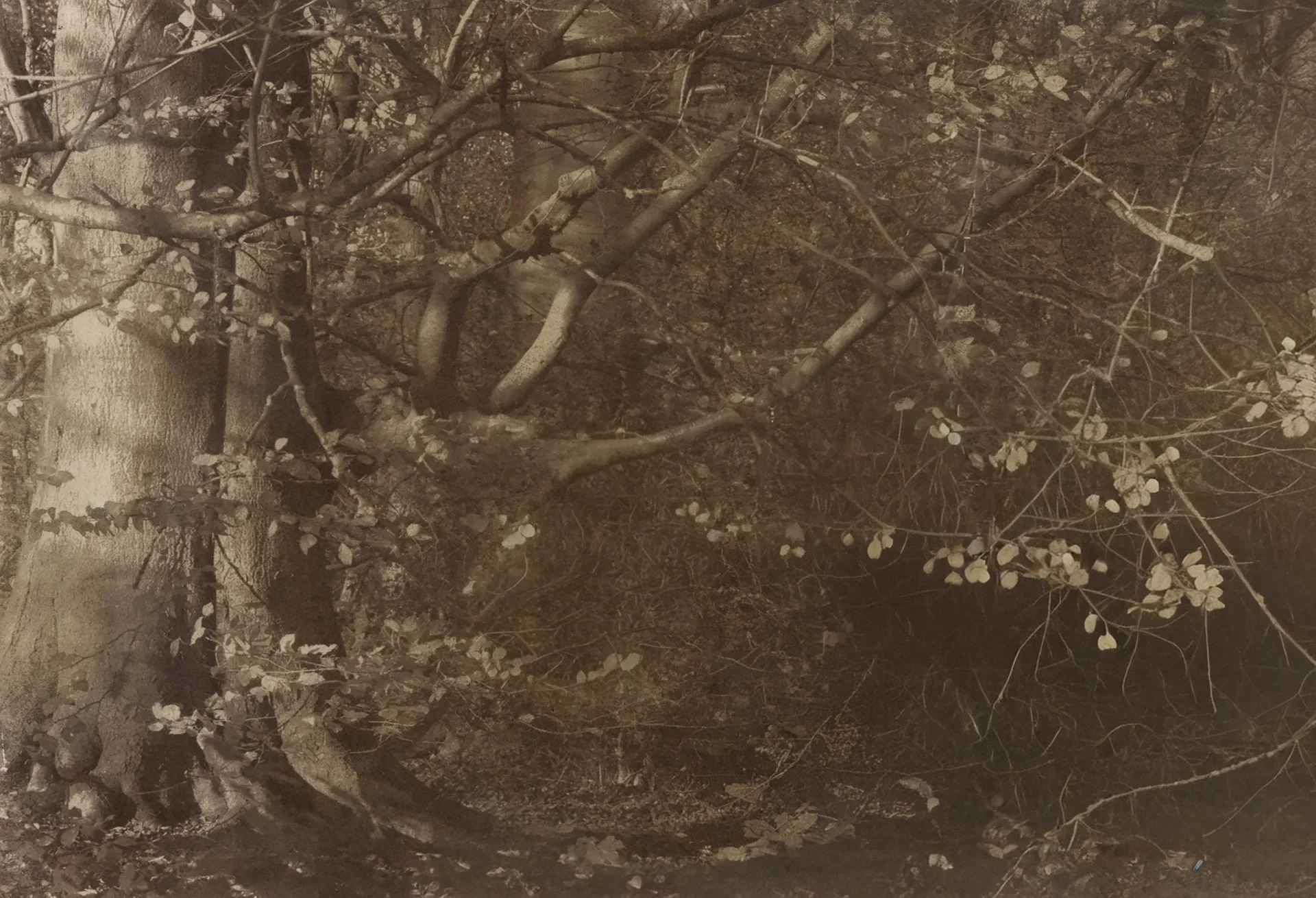
Van Dyke brown print
50 x 40 cm
2025
I am a botanical artist and photographer. My aim is to use art to illustrate the science and improve understanding as well as documenting the measurable benefits of green and blue spaces for physical and mental wellbeing. I work across digital, analogue, and cameraless processes, choosing each method for its ability to reveal a particular aspect of the story, whether that is the architecture of a root system, the chemistry of a leaf, or the atmosphere of an ancient woodland.
The images submitted illustrate this approach. A Van Dyke brown print records the ancient beech forest at Calke Abbey, its centuries-old canopy and understory a living archive of ecological continuity imaged using an ancient technique. Soil and plant chromatograms make visible the metabolic and mineral profiles of that same ground where the technique is a form of biochemical portraiture. Two root lumen prints capture root architecture directly, the structures pressing themselves onto sensitised paper without a lens.
Each process is chosen for what it reveals: the van Dyke for tone and time, the chromatogram for chemical signature, the lumen print for direct physical trace. Together they map a single ecosystem across scales making tangible the systems that underpin the restorative capacity of the green space. My aim is to make plant science visible and felt, and to build a visual case for the protection and expansion of the natural world that sustains us.