 Image 1 of 1
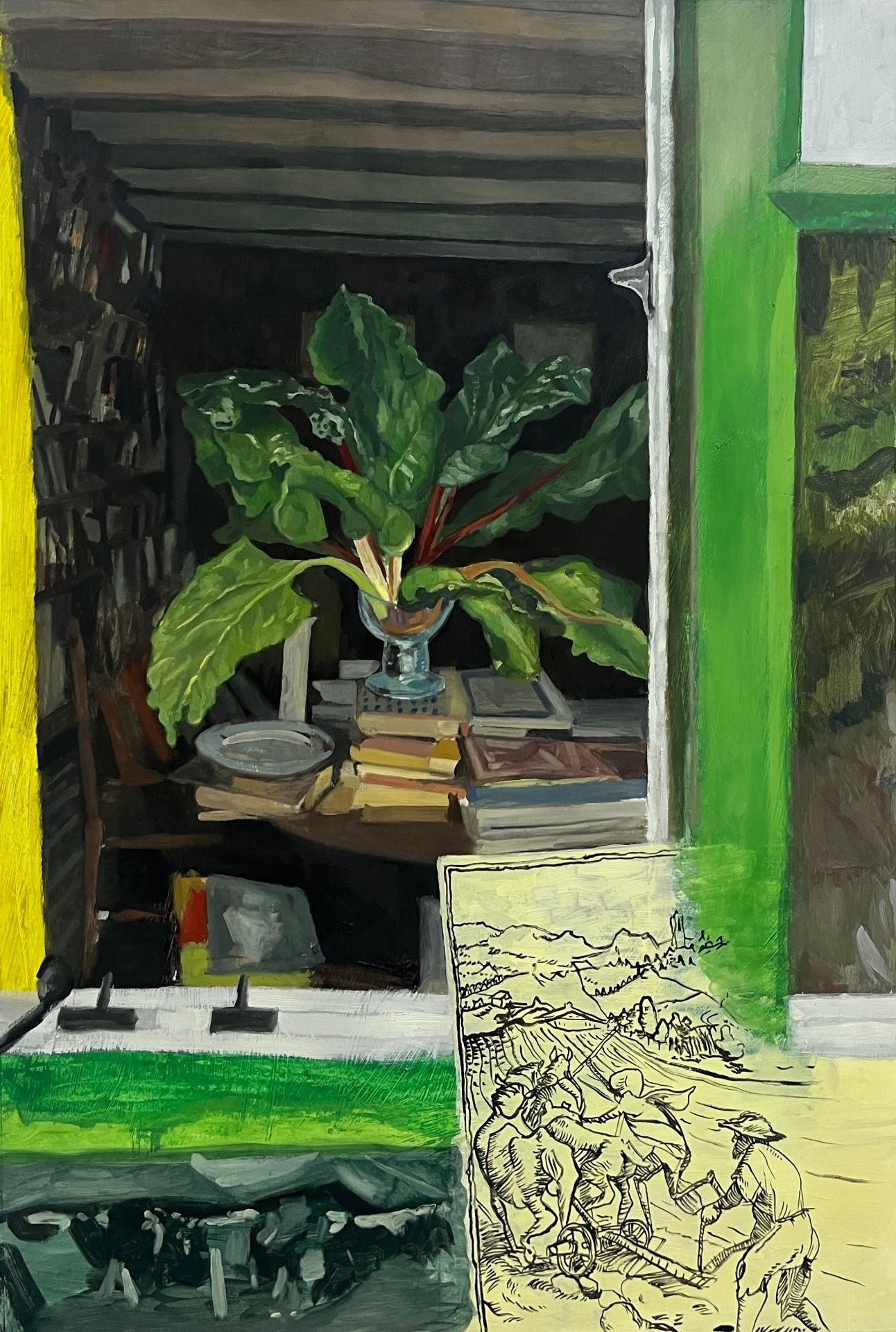
Oil on paper mounted on wooden panel
111 x 75 cm
2026
Carlos Womack makes oil paintings that draw on Baroque Flemish painting, internet imagery, and scenes from his personal life. Each composition develops by combining fragments from these sources into figurative paintings that are thematically and narratively open-ended. Historical paintings often provide solutions to compositional problems that arise during the painting process, leading to blended, abstract, and ambiguous images without fixed conceptual origins or conclusions.
Womack allows this ambiguity to remain unresolved, while creating tensions between figures, architecture, nature, and paint. These contrasts emerge from fiction, historical events, contemporary society, and the unexpected ways individual elements interact within a composition. Their coexistence produces shifting associations, allowing meaning to remain provisional rather than directing the viewer toward one interpretation. No painting begins fully planned. Images first emerge from a haze of ideas, which are explored in sketchbooks until enough material accumulates for a painting to begin. When new compositional problems appear, Womack returns to drawings, adding further elements directly from these studies.
This process introduces additional narrative threads and strengthens relationships between different parts of a painting, as well as between works developing simultaneously in the studio. Sources may come from a commute home, a holiday, or the act of copying a masterwork, and paintings can take months to complete. Womack works concurrently on stretched canvas and, more recently, on paper, valuing its immediacy and fragility. Successful paper works are mounted on wooden cradles.