 Image 1 of 1
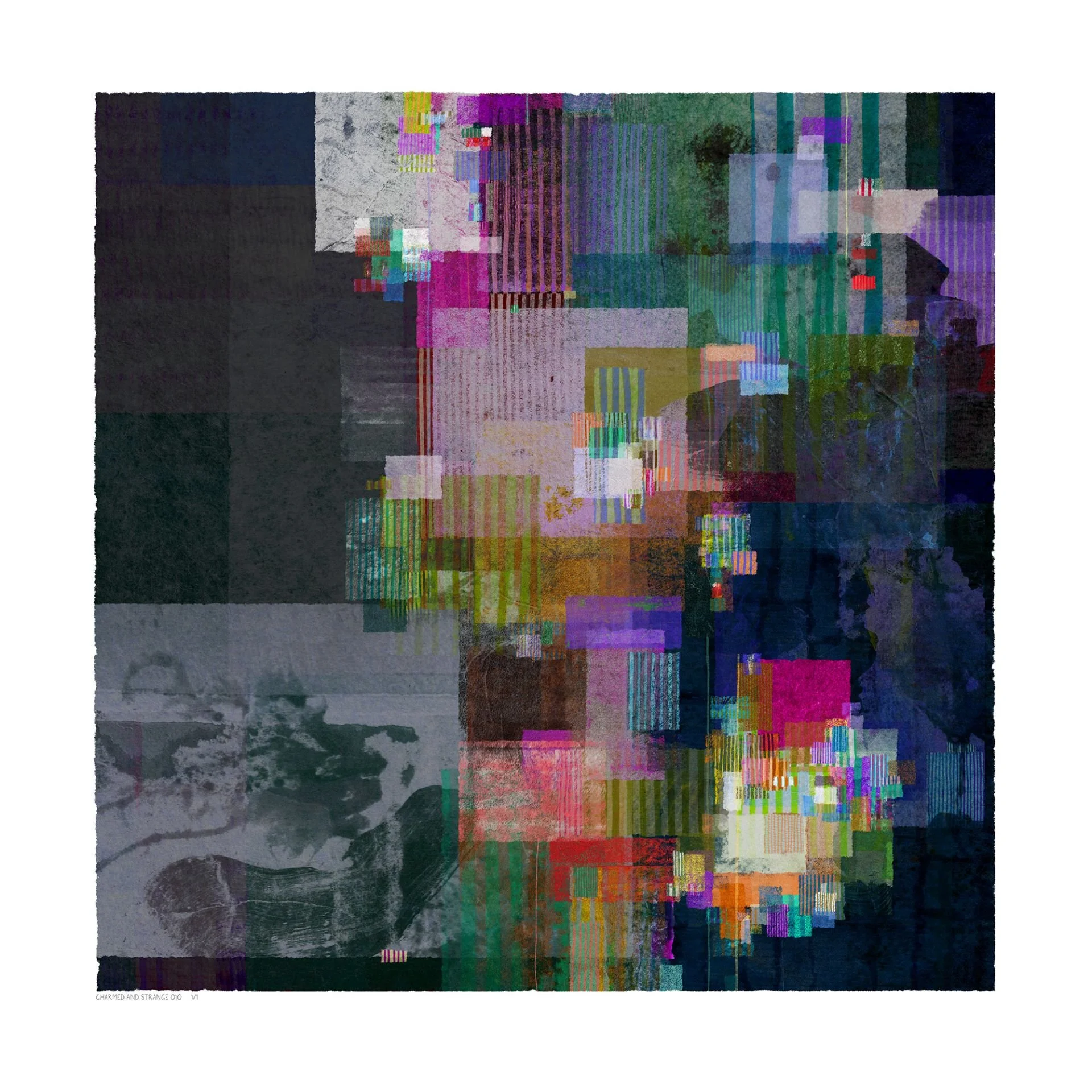
One-off digital print from a unique run of code using images made with drawing, painting and collage
52 x 52 cm
2026
Alex Russell is a contemporary artist, exploring the space between opposites: handmade and digital, methodical and intuitive, science and art, faith and doubt, chaos and order. He works with hand-made images and code (computer programming) to create non-AI generative systems that assemble analogue content into one-off digital prints. The systems translate traditional methods of composition (such as armatures or balanced pattern repeats) into networks of algorithms that influence each other’s relative behaviour. The rules governing this behaviour employ complex systems (such as cellular automata or emergence) to determine the characteristics of each element of the final image.
In pre-digital print processes, the image is a physical part of the technology: an etched line, say, or an open area of silkscreen mesh. Digital printers, however, work with a stream of data corresponding to colour information about each pixel within the image. Unlike other reproductive print processes, the data and hence the image can change with each print. Alex’s unique approach takes advantage of this new possibility. His code creates a different print with every run and only one of each is ever printed. The original combination of traditional hand-made media processes, compositional modelling and computer programming draws on the rich history of printing, exploring the craft possibilities of new media and taking print-making somewhere entirely new.